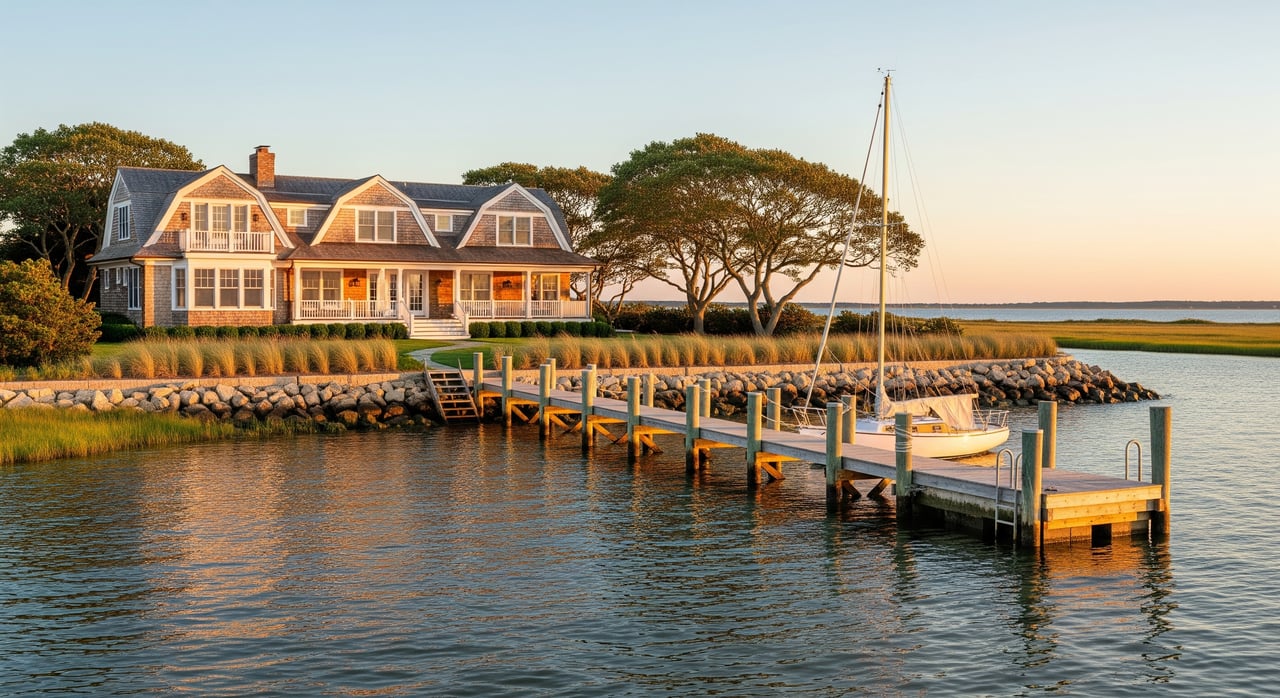
Buying a Bay Head waterfront because you picture mornings on the dock and easy boat access? Before you fall in love with a view, make sure you understand the rules that govern the water itself. In New Jersey, who controls the land under the water, where your boundary stops, and what you can build are not always obvious. In this guide, you’ll learn what riparian rights mean in Bay Head, how permits work, and the due diligence steps that protect your purchase and your dock. Let’s dive in.
Riparian rights in New Jersey
Riparian rights are the privileges tied to owning land that touches tidal water. In New Jersey, those rights can include reasonable access to the water for navigation, mooring, and the ability to wharf out for a pier or dock. These rights exist, but they are regulated by state and federal law. You cannot assume a deed gives you full control over the water in front of your property.
State tidelands and the MHW line
New Jersey generally holds title to submerged lands seaward of the mean high water (MHW) line under the public trust doctrine. Most Bay Head deeds convey the upland only to the MHW line or a bulkhead line. The MHW line is a technical boundary that can shift with accretion or erosion. A licensed surveyor must locate it for your parcel. If a structure sits seaward of MHW, the state often requires specific authorization for its use.
Wharfing out and access
Your riparian rights usually include the ability to access navigable water and to request a dock or pier. That use often requires approvals. In practice, many private docks, bulkheads, ramps, and moorings in Bay Head need permits from agencies and may need leases or grants if they occupy state tidelands. Plan for permitting as part of your purchase timeline.
How this plays out in Bay Head
Barnegat Bay and lagoon properties
Bay Head’s back-bay shoreline includes Barnegat Bay frontage, lagoons, and harbor edges. Bulkheads, seawalls, and private docks are common. Owners are typically responsible for maintenance and replacement of these structures. Because many older deeds refer to a bulkhead or the water as a line, a modern boundary survey is essential to confirm where your upland ends and whether any part of your yard or pier extends onto state tidelands.
Oceanfront parcels
Oceanfront homes face added shore-protection rules and FEMA flood standards. Dunes, shorelines, and beach access programs can affect how far seaward you can build, maintain, or cross. Oceanfront buyer due diligence should include flood zone review, dune and easement records, and coastal permitting checks beyond standard zoning.
Permits and agencies you should know
NJDEP and coastal programs
The New Jersey Department of Environmental Protection (NJDEP) regulates tidal construction and coastal activity. Many Bay Head projects fall under coastal permits, wetlands rules, and the Coastal Area Facility Review Act (CAFRA). Work seaward of MHW or in sensitive areas often triggers NJDEP review. NJDEP’s tidelands group also administers state tidelands grants, licenses, and leases for structures over state-owned submerged lands.
USACE and federal review
The U.S. Army Corps of Engineers (USACE) may require a federal permit for structures in, over, or under navigable waters and for any discharge of dredged or fill material. USACE review can add time and consultant costs. Some projects require coordination with habitat agencies where protected species or submerged vegetation may be present.
Local approvals in Bay Head
Expect building and zoning permits through the Borough of Bay Head for docks, bulkheads, and related work. Local rules may address setbacks, heights, or shared facilities. Ocean County records can help confirm prior plats, tax maps, and easements. In active harbor areas, a harbor master or local marina authority may set mooring or channel-use rules.
Buyer due diligence checklist
Use this checklist early in your contract period so you can resolve issues before closing.
Title and deed records
- Obtain the full deed chain to identify any express reservation or conveyance of riparian rights.
- Review the title commitment and exceptions, including easements and covenants.
- Look for recorded tidelands grants, leases, or licenses tied to the parcel.
- Confirm any recorded maintenance or cost-sharing agreements for shared bulkheads or piers.
- Watch for deed phrases like “to the mean high water line,” “to the bulkhead line,” or “riparian rights reserved.”
Survey and boundaries
- Order a current certified boundary survey by a New Jersey-licensed surveyor.
- Require the survey to show the MHW line or bulkhead, existing docks, pilings, riprap, and any encroachments.
- Confirm the tidal datum used and the surveyor’s stamp.
- Add flood elevation data if available to streamline insurance and lending.
Permits and compliance
- Collect copies of NJDEP coastal or wetlands permits, any USACE permits, and all municipal approvals for docks, bulkheads, ramps, and moorings.
- Confirm whether any structure seaward of MHW has a tidelands lease, license, or grant, if required.
- Check status dates. Expired or never-issued permits are a red flag.
Environmental and hazard data
- Identify your FEMA Flood Insurance Rate Map zone and Base Flood Elevation.
- Note whether the site sits in a Coastal A Zone or V-zone and any local freeboard requirements.
- Ask about wetlands, protected habitats, shellfish beds, or submerged vegetation that may limit work.
- Review any history of erosion, storm breaches, or beach nourishment programs that could affect use.
Local constraints and community rules
- Verify Bay Head zoning setbacks and any coastal development ordinances.
- Check harbor or mooring rules if you plan to berth larger boats.
- Review HOA rules or deed covenants for dock size, boat limits, or design standards.
Title insurance and endorsements
- Ask if the title insurer will provide endorsements addressing riparian rights, tidal boundaries, or structures seaward of MHW.
Practical checks with the seller
- Who built the dock or bulkhead and when? Request as-built plans.
- Any NJDEP or USACE violations or stop-work orders?
- Who pays for dredging or bulkhead repairs? Any past assessments?
- Are there shore-protection or replenishment easements that affect access or landscaping?
- Does any part of the yard or walkway lie on state tidelands or within a public easement?
Common risks and what they cost
Disputes and pitfalls
- Assuming you can add a dock without confirming riparian rights or state approvals.
- Inheriting an unpermitted dock or an older structure built beyond permit limits.
- Encroachments over state tidelands that require a lease, redesign, or removal.
- Boundary uncertainty from shifting MHW lines or outdated surveys.
- Shared bulkhead obligations that surprise you after closing.
- Environmental limits tied to wetlands, eelgrass, or shellfish beds.
Budget and timeline realities
- Boundary and tidal surveys often cost in the low thousands of dollars.
- Coastal permit preparation by consultants can range from a few thousand to five figures, depending on complexity.
- Permit reviews can take months. Federal permits may add time.
- Bulkhead replacement commonly runs from tens of thousands to well over $100,000 based on length, access, and materials.
- Dock costs vary widely. Small floating systems are more affordable than pile-driven piers with lifts or slips.
- Expect ongoing maintenance for pilings, decking, and hardware, plus potential impacts on insurance premiums.
Smart contract protections
Bake riparian diligence into your offer so you can exit or negotiate if issues surface.
- Make the contract contingent on attorney review of deed language, title exceptions, and any tidelands grants or leases.
- Require the seller to deliver all permits, approvals, as-builts, and maintenance agreements for docks and bulkheads.
- Include a survey contingency that calls for a certified boundary survey showing MHW and all waterfront structures.
- Assign responsibility for curing unpermitted structures or violations before closing, or require an escrow holdback.
- Seek specific representations and warranties regarding the legal status of the dock and bulkhead.
The right experts for your team
Complex waterfront deals move smoothly when you assemble the right professionals early.
- New Jersey-licensed real estate attorney experienced with coastal and riparian matters.
- Title company with coastal endorsements and tidelands experience.
- Licensed land surveyor skilled in tidal datums and MHW location.
- Coastal engineer or marine contractor to evaluate bulkheads and design compliant docks.
- Environmental consultant for wetlands and habitat reviews where needed.
- Lender and insurance agent familiar with coastal lending, NFIP, and private flood policies.
Bay Head buyer tips
- Start with the survey. Knowing where MHW lies on your parcel clarifies everything else.
- Verify every approval tied to the dock and bulkhead, not just municipal permits.
- If a structure extends seaward of MHW, confirm whether a state tidelands instrument exists.
- Ask neighbors about dredging cycles and shared bulkhead costs before you commit.
- Build permitting time into your closing plans, especially for new or expanded docks.
A Bay Head waterfront can deliver the lifestyle you want if you verify your rights and the status of every structure touching the water. If you are weighing options or need a plan to check riparian rights, permits, and survey details, connect with the senior advisors who guide waterfront deals every season. Schedule a free consultation with Critelli Realtors® to move forward with clarity and confidence.
FAQs
What are riparian rights for Bay Head buyers?
- They are the rights tied to owning upland next to tidal water, including access and potential wharfing out, but they are regulated and often require permits and state authorization.
Do you own the water or land under your Bay Head dock?
- Usually no. In New Jersey, land seaward of the mean high water line is generally held by the state, and using it often requires a lease, license, or grant.
Can you build a new dock on Barnegat Bay?
- Often yes, but you typically need NJDEP coastal approvals, and sometimes USACE permits, plus local permits and compliance with any tidelands requirements.
Why is a survey showing mean high water essential?
- It fixes the legal boundary between your upland and state tidelands, shows encroachments, and guides what you can build or maintain lawfully.
What if the existing dock or bulkhead was never permitted?
- Expect risk. You may face enforcement, retroactive permitting with changes, or removal; resolve this with the seller before closing or hold funds in escrow.
Who pays for shared bulkhead repairs in Bay Head?
- It depends on recorded agreements, deed language, or neighbor arrangements, which should be confirmed in title records and your contract.
Will my flood zone affect waterfront permits or design?
- Flood zones influence building standards and elevations, can affect permit conditions, and will shape insurance and lender requirements for your project.